
Penile Surgery
Penile Implant Surgery
A surgical solution for severe erectile dysfunction when other treatments no longer provide reliable results.
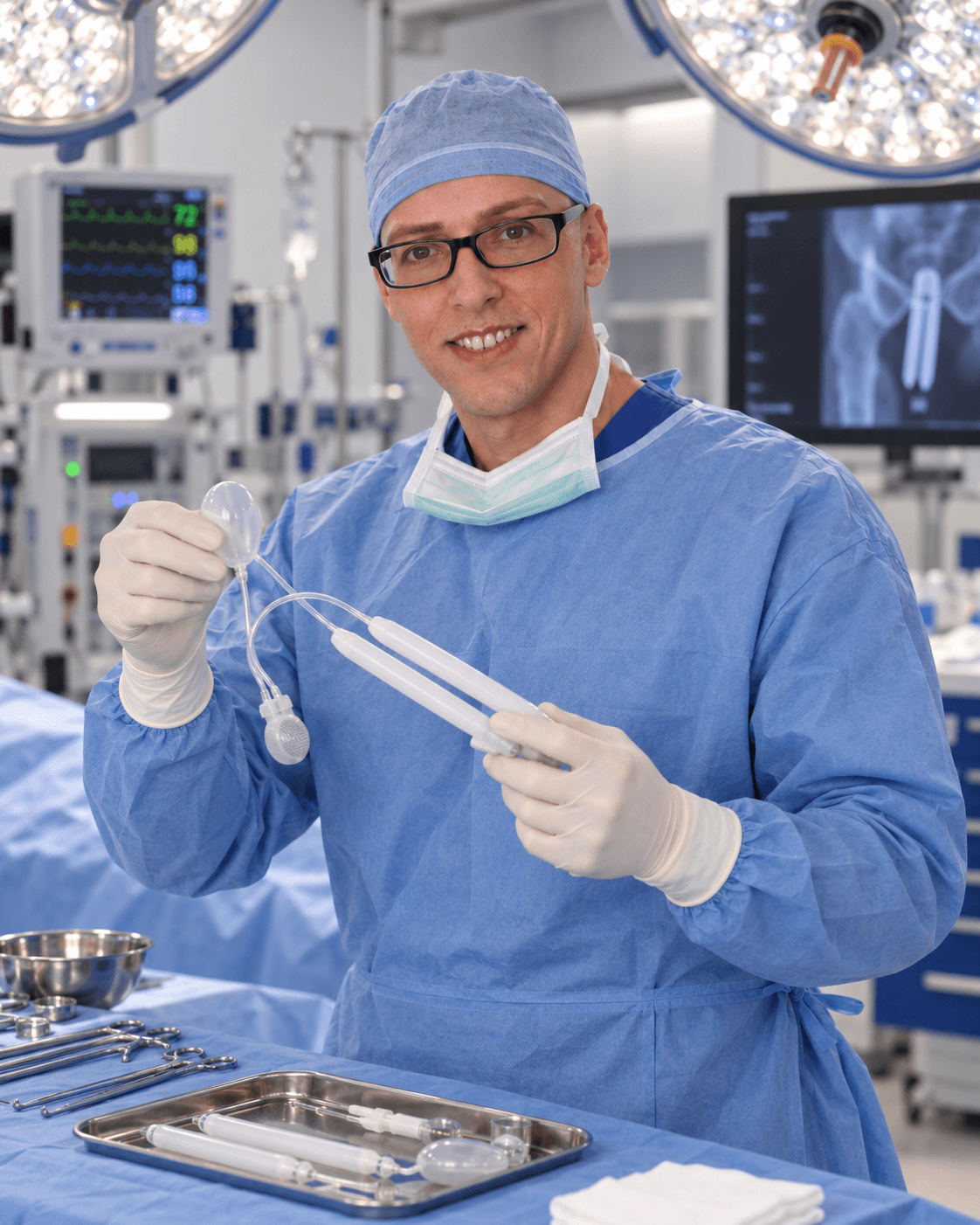
Our approach
Penile Implant Surgery Is the End of an Assessment Pathway — Not the Beginning
A penile implant is a surgical decision, and surgical decisions deserve more than a single conversation about a device. Before it is discussed as a realistic option, assessment covers:
Cause and severity
Confirming that erectile dysfunction is genuinely severe or refractory — not assumed from symptoms alone.
Previous treatments
Reviewing what has already been tried — oral medication, vacuum devices, injectable therapy — and why it did or didn't work.
Wider clinical context
Vascular, hormonal and anatomical factors that may be contributing are assessed, not overlooked in favour of a quick surgical fix.
Realistic expectations
What an implant can and cannot restore — for rigidity, sensation, orgasm and perceived length — discussed before any surgical decision, not after.
Device selection
Inflatable or malleable, chosen according to anatomy, health and personal preference, not offered as a single default recommendation.
This is what separates a specialist ED pathway from a generic implant provider — the device is the last step of an assessment, not the first conversation.
What is a penile implant?
A Device Placed Within the Penis to Restore Rigidity
A penile prosthesis is a surgically implanted device, placed within the erectile chambers of the penis, designed to allow a man to achieve a rigid erection when desired.
Candidacy — reviewed individually, never assumed
Often considered once
- Erectile dysfunction is severe or refractory
- Oral medication, vacuum devices or injectable therapy have not provided reliable results
- The underlying cause has already been appropriately assessed
Addressed or reassessed first
- Active infection at the time of assessment
- Reversible or unaddressed causes of erectile dysfunction not yet fully explored
- Expectations that don't align with what the surgery is designed to do
- Certain anatomical or medical factors identified at assessment
Device options
Inflatable vs. Malleable
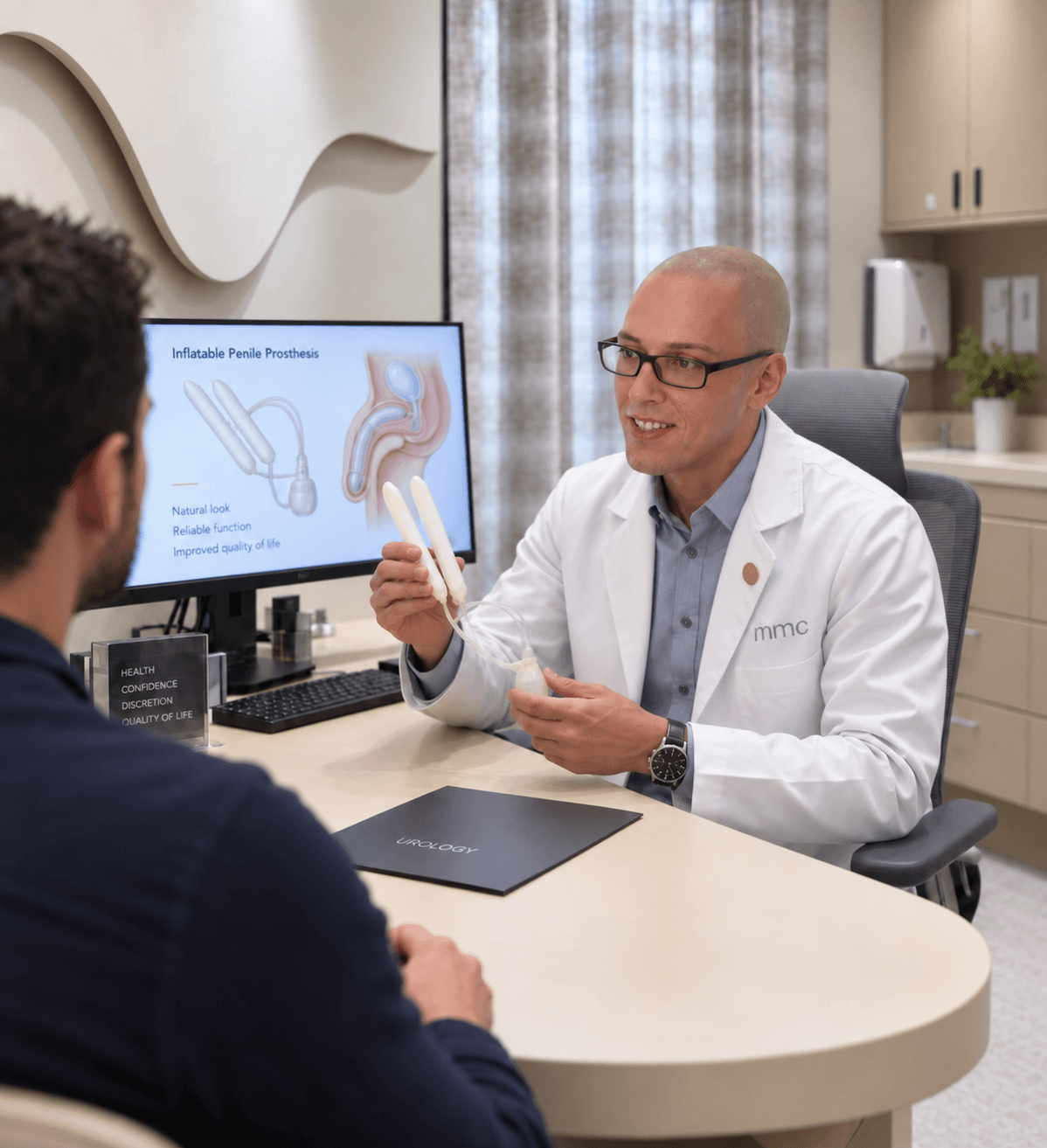
Inflatable prosthesis
- Two- or three-piece devices designed to closely mirror natural rigidity and flaccidity
- Includes an internal pump mechanism, most often placed in the scrotum
- The option most commonly selected among candidates
Malleable prosthesis
- A simpler mechanical design, with no internal pump
- Semi-rigid rods that can be manually positioned
- May be considered when a simpler surgical approach is preferred
The surgical pathway
Assessment, Surgery, Recovery

Assessment
Confirming that erectile dysfunction is severe or refractory, reviewing previous treatments tried, and evaluating overall health and expectations before surgery is considered.
Surgery
Performed under appropriate anaesthesia. The chosen device — inflatable or malleable — is placed within the erectile chambers of the penis.
Recovery
A structured recovery period follows, with activity gradually resumed and device use introduced under guidance, timelines discussed individually at consultation.
After implantation
Sexual Function After Surgery
A penile implant is designed to allow a man to achieve a rigid erection when desired. It does not change sensation, orgasm or ejaculation, which are governed by separate mechanisms. As with any surgery, individual results vary, and expectations are discussed in detail during assessment — the aim is a realistic understanding of what the device can and cannot do before proceeding.
Day to day, an inflatable device is activated by a pump mechanism, most often placed in the scrotum, that a man operates himself when he wants rigidity; a malleable device is simply positioned by hand. Some men also perceive a reduction in length compared to their erections before erectile dysfunction developed — this is generally related to the underlying condition itself, including tissue changes that occur with longstanding untreated ED, rather than something the implant surgery removes. This is part of the realistic-expectations conversation at assessment, not a surprise left for after surgery.
The aim is a realistic understanding of what the device can and cannot do — before proceeding, not after.
Realistic expectations
Risks and Complications
- Infection
- Mechanical wear or device malfunction over time, in some cases requiring revision surgery
- Changes in sensation
- Bleeding or bruising
- Risks associated with anaesthesia and surgery generally
FAQs